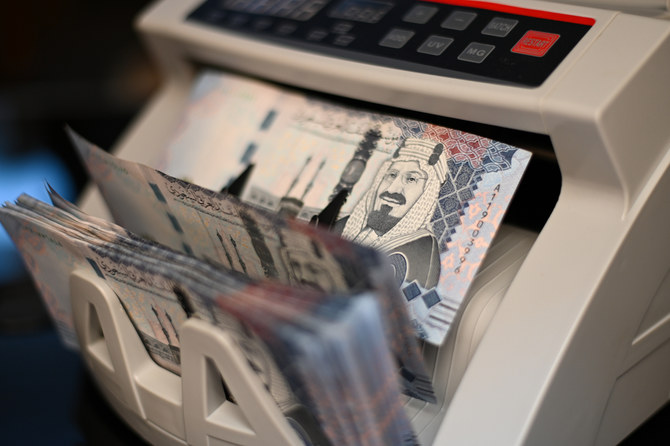
Saudi Arabia’s money supply surpassed the $882 billion mark for the first time in its history at the end of March 2026, as broad money (M3) rose to SAR3.307 trillion ($882 billion), according to data from the Saudi Central Bank (SAMA).
The record increase in liquidity comes in line with the Kingdom’s accelerating economic growth under its Vision 2030 program. Annual growth in money supply reached 8.25 percent, compared with SAR3.055 trillion in March 2025, reflecting strong financial activity and robust capital spending.
Analysts attributed the continued upward trend since the start of the year to faster financing of major projects and growth in credit extended to the private sector, boosting money circulation within the domestic economy.
On a monthly basis, money supply increased by around SAR18 billion from February 2026, when it stood at SAR3.289 trillion, extending its upward trajectory since the beginning of the year.
Time and savings deposits recorded the strongest growth among liquidity components, rising from SAR1.075 trillion in March 2025 to SAR1.243 trillion, an annual increase of more than 15.6 percent.
The sharp rise was attributed to growing savings awareness among individuals and companies, as well as the attractiveness of deposit returns amid elevated interest rates, prompting customers to favor longer-term savings instruments to secure stable returns.
By contrast, currency in circulation outside banks grew by around 2 percent year-on-year, increasing from SAR251.5 billion to SAR256.4 billion, indicating the success of the Kingdom’s strategy to promote digital payments and reduce reliance on cash transactions.
Demand deposits rose from SAR1.461 trillion to SAR1.504 trillion, marking annual growth of nearly 3 percent and reflecting sufficient immediate liquidity to cover private-sector operating needs and daily consumer spending.
Other quasi-monetary deposits increased year-on-year from SAR266.8 billion to SAR302.9 billion over the same period.