The International Monetary Fund cut its 2026 growth forecasts for Gulf economies, citing uneven exposure to energy markets and trade disruptions, as well as differing access to alternative oil export routes.
Saudi Arabia is expected to lead regional growth at about 3.1 percent this year, supported by alternative pipeline capacity, the IMF said. The fund also sharply lowered its 2026 growth forecast for the Middle East and North Africa to 1.3 percent.
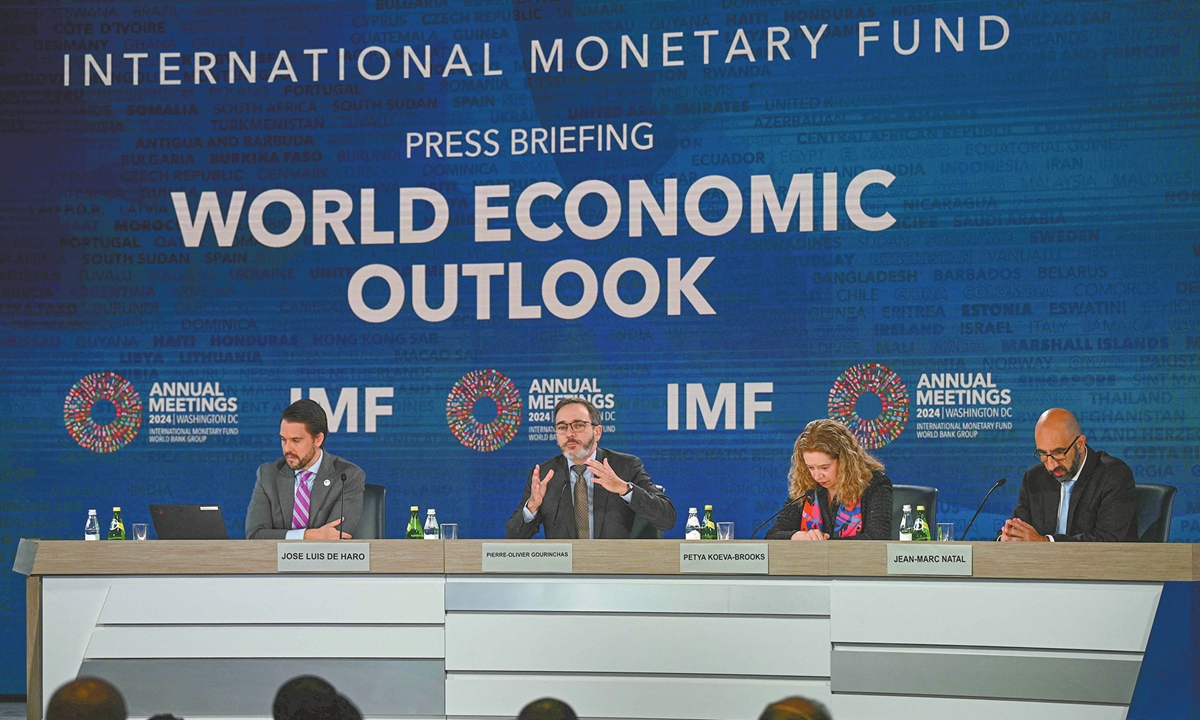
The revisions were outlined in the IMF’s World Economic Outlook report, released during the Spring Meetings of the IMF and World Bank in Washington. The fund said the region faces a marked downgrade due to attacks on energy infrastructure and supply chain disruptions.
Qatar was the hardest hit economy in the region. The IMF cut its forecast by 14.7 percentage points from its January outlook and now expects the economy to contract by 8.6 percent this year, reflecting its heavy exposure to the conflict.
Qatar’s Ras Laffan industrial city — the world’s largest liquefied natural gas export facility — has been offline since early March following a missile strike by Iran, triggering a global gas supply shock. The disruption could affect about 17 percent of Qatar’s annual export capacity for up to five years.
Saudi resilience
Saudi Arabia has shown greater resilience. Despite a 1.4 percentage point downgrade from January, growth is still projected at 3.1 percent in 2026.
The Kingdom has benefited from alternative export routes via the Red Sea, allowing it to bypass the closure of the Strait of Hormuz.
Growth is forecast to accelerate to 4.5 percent in 2027, pointing to stronger medium-term prospects. Saudi Arabia has relied on an east-west pipeline to transport oil overland to the Red Sea, ensuring un-interrupted supply to customers despite disruptions to Gulf shipping routes.
The IMF cut the United Arab Emirates’ 2026 growth forecast to 3.1 percent, down 1.9 percentage points, after partial disruptions to gas facilities and the port of Fujairah.
Oman is expected to post the strongest growth among Gulf Cooperation Council countries this year at 3.5 percent, despite a modest 0.5 percentage point downgrade — the smallest revision in the bloc.
Kuwait’s economy is forecast to contract by about 0.6 percent after a sharp 4.5 percentage point downgrade, while Bahrain is also expected to shrink by 0.5 percent following a 3.8 percentage point cut.
Iraq and Iran
Beyond the Gulf, Iraq’s economy is expected to contract by 6.8 percent this year after a steep 10.4 percentage point downgrade, as the war weighs heavily on the country. Crude oil exports fell by more than 81 percent in March.
Iran’s gross domestic product is also projected to contract by 6.1 percent this year, with the IMF cutting its January forecast by 7.2 percentage points.
The IMF said growth across these economies is expected to rebound in 2027, assuming energy production and transport return to normal in the coming months.
However, it warned that this assumption may need to be revisited if the conflict is prolonged and the scale of the damage reassessed.
The fund added that importing countries are also being hit by higher energy and commodity prices, citing Egypt, where growth expectations were cut by 0.5 percentage points to 4.2 percent.